Sunday, June 13, 2010

Land Rover Defender by Aznom


Aznom and Romeo Ferraris have teamed up to create a modified Land Rover Defender.

Despite looking rather conservative, Aznom equipped the SUV with carbon fiber bumpers, a two-tone matte paint job, red accents, and black wheels with Kumho Road Venture tires. Inside, the cabin boasts alcantara upholstery, a carbon fiber steering wheel, Sparco sport seats, and carbon fiber trim.

Under the hood, Romeo Ferraris tweaked the 2.4-liter turbodiesel four-cylinder engine to produce 152 hp (113 kW / 154 PS) - an increase of 30 hp (22 kW / 30 PS). While no performance data was released, the upgrade should help to move the Defender with a little extra oomph.
Source: autoblog.it via autoblog.com

Race - McLaren one-two in Montreal thriller


Lewis Hamilton and Jenson Button in their McLaren MP4-25s turned the world championship fight on its head in Montreal on Sunday afternoon, when they scored the team’s third one-two of the season after a tense race in which nobody was able to relax.

It began with second fastest qualifier Mark Webber being moved back five grid places after Red Bull replaced his gearbox, then a collision between Ferrari’s Felipe Massa and Force India’s Vitantonio Liuzzi which split the field up and put some unfancied runners in places you wouldn’t have expected in the midfield.

Up front Hamilton grabbed the lead from Red Bull’s Sebastian Vettel and Ferrari’s Fernando Alonso, with Button slipping into fourth as Liuzzi and Massa fell down the order to begin sterling recovery drives after pit stops.

Soon it became apparent that those who had gambled on soft rubber in qualifying were in trouble: Button, Hamilton and Alonso all pitted for the harder Bridgestones within seven laps.

That left Vettel in the lead with Webber a surprised second, having closed in while Hamilton was struggling for grip. But when the Red Bulls pitted on the 13th and 14th laps the complexion of the race changed again. Vettel switched to the option tyre and lost ground; Webber stayed on the primes, intent on building enough of a lead to be able to stop for the options (as per the rules which say you have to run both compounds in a race) without losing first place.

That plan was stymied by heavy mid-race traffic, and he eventually lost the lead before his final stop on Lap 50. That should have put Alonso in front after he’d outdragged Hamilton from their first pit stop, but the 2008 champion overtook the Ferrari on the final straight, and after that Alonso came under increasing pressure from Button, who took second place away on the 56th lap when the Spaniard was seemingly baulked by Karun Chandhok’s HRT.

The Ferrari driver clung to third, comfortably ahead of Vettel, whose switch to a second set of the harder tyres didn’t improve his Red Bull’s speed. Webber had to run the final 20 laps on the options, which were good for a while before losing their edge.

“It was one of those races”, Hamilton said, “where it was very hard to judge how hard to push and how much to try and conserve your tyres.”

In the end that was how they finished, which leaves Hamilton in the lead of the world championship with 109 points to Button’s 106, Webber’s 103, Alonso’s 94 and Vettel’s 90. McLaren lead Red Bull and Ferrari, with 215 points to 193 and 161.

“It’s been a tremendous weekend, fantastic,” Hamilton beamed. “Things have just gone so well for us, and there’s been incredible support from all the Brits out here. And the team did an exceptional job. This was one of the toughest races so far but that’s what you want, you want it to be difficult. I won my first Grand Prix here three years ago, and to come back and repeat that has been a real pleasure.”

Nico Rosberg lost time early on in the Liuzzi/Massa melee, but a few fastest laps in a strong comeback drive eventually earned him a solid sixth place for Mercedes, ahead of Robert Kubica who had an adventurous afternoon for Renault which included a brush with Michael Schumacher, harassment by Force India’s Adrian Sutil, a late pit stop for fresh tyres, and a trip to the stewards where he was asked to explain having to cut across Sutil when he made his second pit stop on Lap 35. The Polish driver was eventually handed a reprimand.

Behind them, Sebastien Buemi drove a blinder for Toro Rosso, making the most of the first-corner incident. He was about to lead the race when he pitted for fresh rubber at the end of the 15th lap, and thereafter pushed hard all the way to eighth for the Faenza team.

Michael Schumacher seemed likely to finish ninth, having savagely blocked Massa’s attempts to wrest away the place, but then he got caught by Liuzzi on the final lap, and then got shuffled out of the points when Sutil jumped him too going down to the last corner.

The two Force India drivers were embroiled in a mighty scrap with each other, Massa, who set a series of fastest laps and lost his chance of points thanks to Schumacher, Nico Hulkenberg before the young German dropped back, and Jaime Alguersuari before the Spaniard, too, lost ground.

In the end Liuzzi’s excellent drive paid off with ninth, but he could have been much higher without that first corner clash. Schumacher was another who had to visit the stewards, but no action was eventually taken against him. Massa, meanwhile, was initially classified 15th, but then got another 20s added to his race time for speeding in the pit lane.

Alguersuari eventually took 12th from Williams’ Hulkenberg and Rubens Barrichello, whom the Spaniard had run into at the hairpin on the seventh lap. Heikki Kovalainen was a strong 16th, having at one stage run as high as sixth for Lotus after the early pit stops and having made up places hand over fist in the first corner. He led home Vitaly Petrov, who got two drive-through penalties for jumping the start, and then causing a collision with BMW Sauber's Pedro de la Rosa.

Chandhok was 18th for HRT, ahead of the Virgins of Lucas di Grassi and Timo Glock which were the final finishers. BMW Sauber had an appalling race, with De la Rosa shoved into a spin even before he got to the first corner, Kamui Kobayashi biting the Turn 14 exit wall at the end of the opening lap, and then De la Rosa going out with engine failure. Jarno Trulli’s Lotus yet again fell prey to mechanical ills, as did Bruno Senna’s HRT.

Saturday, June 12, 2010

Jakarta Travel Guide


Jakarta is a well-known city in the world, but the main thing it used to be remembered in the news was different kinds of protestors and demonstrations, but not places of interest and tourist facilities. But times and things change. The same happened to the city.

Many travelers either start or finish their trip by Jakarta though night-life in city is the one of the most interesting and exciting in the world.

The city itself cannot boast to have lots of places of interest but it is a lively commercial centre.

The heart of the old Dutch town at Taman Fatahillah. There are also several museums and a National Monument.

When in Jakarta you will have a chance to watch Sunda Kelapa, the old harbour from which merchantmen from all over the world come and go; Anak Krakatoa and the night-time southern sky which are not easy to forget.

Indonesia is a country with a wonderful mixture of beauty and chaos, beautiful nature and friendly and easy-going people.

girl thai


khmer karaoke


Friday, June 11, 2010

Shakira -WAKA WAKA -FIFA World Cup 2010 Celebration(HQ)

P-Square - Danger

The Best Laid Plans The A-Team Gets a B-Minus


IN THE DAWN OF THE '80s, NBC Entertainment President Brandon Tartikoff approached producer Stephen J. Cannell (The Rockford Files, 21 Jump Street) with the subtle idea for an adventure series that would be a cross between Mission: Impossible, The Dirty Dozen, and Mad Max--with "Mr. T driving the car." That show eventually became The A-Team, a hilariously macho series about adventuring mercenaries that ran from 1983-1986, and produced a generation of boys who worshiped lines like, "I love it when a plan comes together."

The plan in 2010? To revive the charm and violent magic first conjured by Hannibal, Face, B.A. Baracus and Murdock in today's grotesque cinematic landscape. At first glance it would appear to be an easy transition; while it may appear quaint now, the original A-Team was a violent, explosive spectacle--the Transformers of its day. The question is whether or not the charm (another central element of the original) could survive.

The frustrating answer is both "yes" and "no." Liam Neeson and Bradley Cooper are certainly roguish enough as Hannibal and Face, while Sharlto Copley (District 9) acts sufficiently nutbaggy as Murdock, and Quinton "Rampage" Jackson as B.A. Baracus... well, he's doing the best he can in the impossible job of following Mr. T. And these guys do have chemistry together. The first half practically crackles with winky wit that pops up in unexpected places, and the cartoonish violence of the original plays surprisingly well in some of the over-the-top earlier scenes.

However the charm that dominates the first half falls victim to Michael Bay-style visual histrionics during the final reels, and the ensuing mess deadens any interest and good will they were so successfully building. Unlike many TV show reboots trying to refire the magic in this modern era, this A-Team showed some actual promise. Unfortunately (and I apologize in advance for what follows) this was just another plan that didn't quite come together.

Thursday, June 10, 2010

Cambodian community talks about troubled past, looks to the future

It’s been three decades since the Khmer Rouge killing fields, and Sochanny Meng still has nightmares. Meng, 49, came to the United States as a refugee from Cambodia, where between 1975 and 1979 the brutal Khmer Rouge regime killed 1.7 million people – one-fifth of the country’s population – through overwork, starvation, torture and execution.

“Why my people killed my people like that … I don’t understand that,” says Meng, whose mother was executed by the Khmer Rouge. “I still don’t understand.”

In April, Meng will sit down in front of a camera for an interview about his past. What happened to him in Cambodia? What did he see? How did he survive? His questioners won’t be historians, reporters or documentarians but his American-born sons, 20 year-old twins Kenny and Jimmy.

The family is part of an oral history documentary project organized by the Cambodian-American Community of Oregon (CACO). With $60,000 in grants from the Northwest Health Foundation and Vision into Action, CACO is training Cambodian-American youths to interview their own parents and grandparents about their experiences under the Khmer Rouge. The interviews will be filmed and compiled into a 20-minute documentary, which will screen for the community and the public in August.

CACO President Mardine Mao says many of the community’s elders have rarely – if ever – spoken about their history before. Instead, they try their hardest to bury the painful memories.

“We feel like our younger generation don’t know much (about what happened), because their parents don’t tell them,” Mao says. “We’re asking them, basically, to open up a can of worms.”

The Khmer Rouge rose to power in Cambodia after years of guerilla warfare, aggravated by spillover from the U.S. campaign in Vietnam. Led by Pol Pot, the totalitarian regime imposed a radical system of agrarian communism, forcing millions of people out of cities and into farm labor camps. Children were separated from their families to be indoctrinated, put to work and sometimes trained as child soldiers. People who were educated, in ethnic minorities, religious or accused of disagreeing with the ruling party were tortured and killed.

Oregon and Southwest Washington are home to an estimated 5,000 to 10,000 Cambodian-Americans, many of whom lived through the Khmer Rouge years and came here as refugees in the early 1980s. Mao says many people in the community are still plagued by nightmares and post-traumatic stress – they may have stomachaches they can’t explain, or mistake celebratory fireworks for wartime bombs.

Between wariness of Western doctors and the stigma associated with mental health issues, many Cambodian-Americans are reluctant to seek treatment, according to Leakhena Nou, a sociology professor at California State University in Long Beach. Nou has studied Cambodian populations in both the U.S. and Cambodia.

Instead, emotional distress often manifests in other ways. Nou says Cambodian-Americans have high rates of diabetes and stroke, as well as problems with drug addiction, alcoholism and family violence.

“There are lingering effects of this trauma,” Nou says. “When you cut yourself, a deep cut, and there’s a scar – no matter what you try to do, the scar remains. That’s how I see the state of mind for the Cambodians.”

Mao hopes the oral history project will accomplish three things: raise public awareness of the Khmer Rouge atrocities, help Cambodian-American youth understand where their families came from, and give Khmer Rouge survivors some catharsis so the community can begin to mend.

“The process of talking itself, the process of hearing the story – it’s a healing process,” Mao says.

Of course, remembering can be traumatic in itself. Nou says that some refugees are afraid to tell their stories, especially in public forums, because “there is still a real fear that the Khmer Rouge will come back and harm them.”
alt=""id="BLOGGER_PHOTO_ID_5481408317980141138" />


At a training workshop for participants in the oral history project, one grandmother said she’d been interviewed about her Khmer Rouge experience before. The first time she dredged up the memories, she said, she broke into a week-long fever. Physical reactions are not uncommon, according to Mao.

“At first they have chest pains and anguish, and they can’t talk without tears,” she said. “The more they talk, the more they feel free of the burden.”
The project is personal for Mao, who herself came to Oregon as a Khmer Rouge refugee in 1981. Though she was already 13 years old when she left with her mother, Mao says she doesn’t remember anything about Cambodia except that she wanted to forget.

“The only memory I have of coming to America is being ashamed of where I came from,” says Mao, now 41. “As a teenager, you don’t want to remember that kind of thing, so I blocked everything out and tried to assimilate … when where you come from, all you know is starvation, killing and poverty, you want to move away from that.”

Mao’s mother never told her about the Khmer Rouge years. Only after her mother’s death six years ago did Mao learn from her stepfather, whom her mother did talk to, what had happened.

At 8, Mao now knows, she was separated from her mother and two siblings and sent to a village to be reeducated. There, Mao squirreled away bits of food to bring to her mother, starving in another camp, on the rare visits they were allowed.

“I had a better life than her because I had food,” Mao says. “Not enough food, but more than her.”

When Vietnamese forces ousted the Khmer Rouge and liberated camps in 1979, Mao was reunited with her mother. Mao’s mother held her by the hand and carried her young sister as they walked 30 miles from the village to the city in search of relatives. When they arrived, they learned that Mao’s aunt and younger brother had both perished – her brother had been malnourished and succumbed to an infection in his ankle.

Soon after, Mao’s sister fell ill and also died. The country was still in chaos. When she tells this part of the story, Mao tears up at the thought of her mother, alone and afraid with only her one daughter left.

“I just can’t imagine how scary it is,” she says. “All of the family were gone.”

Like many thousands of others, they fled to a refugee camp on the Thai-Cambodian border. In 1981, a relative in Oregon sponsored their visa, and they immigrated to Milwaukie. Mao earned money doing yardwork to help her mother make ends meet, and she did all she could to fit in. In high school, if anyone asked, she said she was Filipino, not Cambodian.

Mao says it took years for her to move past her shame and engage with the Cambodian-American community. When she did, she realized many of her fellow refugees shared her emotional struggles.

Now, she says, she understands that “we have a beautiful country. What happened was not our fault. It’s what the government did.”

Without her mother to fill in the details, Mao’s story remains patchy. Now that she has sons of her own, she wishes she could tell them more than what she’s heard second-hand.

“You don’t realize until they’re gone,” she says. “I didn’t know what happened, and then my mom passed away. So … my history is gone.

The first trial of a Khmer Rouge leader began this February, 30 years after the regime was removed from power. Kaing Guek Eav, known as Duch, oversaw a prison where up to 20,000 people were brutally tortured and sent to a killing field. Charged with crimes against humanity, he is the first of five Khmer Rouge commandants who will be called before a United Nations-backed tribunal in Cambodia. Pol Pot died under house arrest in 1998.

Mao has invited one of the trial’s prosecutors to join a panel discussion when the documentary is screened in August. Nou, the sociologist, says CACO’s oral history project fits in with a larger effort to involve Cambodian-Americans in the process of seeking out truth and justice.

After another workshop to prep the young documentarians, filming will begin in April. Christina Sek, a 16 year-old with a ready smile and a long twist of dark hair, is excited about interviewing her father. Sek was born in the States, and she knows her father came here from Cambodia, but most of his past is a mystery.

“I know that he has scars on his body,” she says, “so I assume those didn’t happen in the U.S.” Sek says she never asked her father about his past because she knew it was painful, but she thinks talking to him for the documentary will bring them closer together. “I’m just excited to hear a part of him that I’ve never heard before,” she says.

Chanly Bob, CACO’s board chairman, intends to interview his 80 year-old mother. Now 35, Bob remembers some of the six months he spent in a refugee camp in the Phillippines before immigrating to Albany, Ore., at age 8. But most of the memories lie with his mother, who shies away from talking about the Khmer Rouge.

Bob says he knows there are some stories he’ll probably never hear, because they’re too difficult for his mother to tell, but he wants to preserve as many of her experiences as he can for future generations.

“Before it’s too late, I want to make sure that her struggles, her history, her horrors, anything beautiful that she remembers … that I know it,” Bob says. “It’ll be a lost treasure when we don’t know what happened.”

For his part, Sochanny Meng hopes his children will hear his story and understand how lucky they are.
“My people … they had no school, they had no food, they had no money to support themselves,” he says, pausing to find the English words that match his thoughts. “I hope in the future my people might be better than before.”

angkorwat


Hi, everyone! I'm Nicole-loy from Cambodia. Now, I'm really proud to introduce my country to all of you. I'm going to show you about the history of Cambodia, life of Cambodian and many more that you can get to know my country. Hope you enjoy!!!

Welcome to Cambodia "Kingdom of Wonder"

Get to know about Cambodia!!!

The Kingdom of Cambodia formerly known as Kampuchea,
a country in South East Asia with a population of over 14 million people.
Phnom Penh is the capital and the largest city of Cambodia.

The country borders:
Thailand to its west and northwest
Laos to its northeast
Vietnam to its east and southeast
In the south it faces the Gulf of Thailand.

The geography of Cambodia is dominated by the Mekong river and the Tonlé Sap ("the fresh water lake"), an important source of fish.

Cambodia's main industries are garments, tourism, and construction. In 2005, oil and natural gas deposits were found beneath Cambodia's territorial water, and once commercial extraction begins in 2011, the oil revenues could profoundly affect Cambodia's economy.
alt=""id="BLOGGER_PHOTO_ID_5481371021905895970" />

Oh, yeah!! If you're tired, stress, boring, "KOMPONG SOM" is one of the best places where you can solve all these problems. Kompong Som is one of the cities in Cambodia. It's also the tourist place. People go to Kompong som to absorb the fresh air, swimming, play sand, fishing, canoeing, camping, especially to see the beautiful beach with the clean and wonderful sea that you can enjoy. The thing that you don't have to forget when visit Kompong Som is "eating seafood". You will taste the delicious Khmer foods (Cambodia food). The seafood are fresh; don't worry, it isn't frozen. I cannot report you about this point, because now my stomach is....when my brain thinks about that delicious seafood from Kompong Som lol..

Many interesting places are waiting for your coming...
alt=""id="BLOGGER_PHOTO_ID_5481371015188671602" />


Life of Cambodian

Cambodia is a peaceful country. Most people in the country side are the farmers. They're farming, fishing and feeding the animals. Even though, they aren't the special or powerful job, but people always enjoy their simple life. The only thing they need is "Happiness". Cambodia is the country that exports paddy, too.

On the other hands, in the city is much more different than the country side. As I have told you above, Phnom Penh is the main city and the biggest city in Cambodia. Phnom Penh has lots of entertainment place, tall building, super mall and many other special things that can interest the visitors to come, increase day over day. Cambodia doesn't have many tall building. It's such a natural country. That's why; many foreigners like to visit Cambodia.

Cambodia is a nature country which full of natural places, never face any disasters. Beside the beach, waterfall is one of the most spectacular places in Cambodia. Most waterfalls are located in the southeast of Cambodia. You can go there to relax, see the beautiful waterfall, swimming, take pictures, inhale the fresh air, listen to the birds sing and many other natural things that you can do and see… Take your time there; I'm sure you won't regret your time....


gun


girl


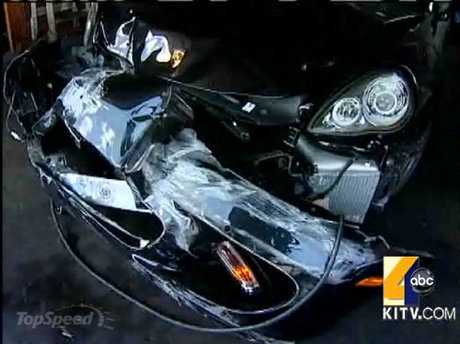
Kanye West’s Porsche Panamera Turbo crashes in Hawaii


No matter what he does, Kanye West just can’t seem to escape the headlines.

This time around, a black Porsche Panamera Turbo registered to his name crashed into a house on Diamond Hill Road in Hawaii over the weekend. This dude just can’t seem to catch a break, can he?

According to one of the residents in the area, Chris Cooper, he awoke sometime around 4 am last Saturday to a thundering noise from across his house. "Just a tremendous crash. As if a small building were coming down," he said.

"I looked over and saw the car impaled in the garage," he added, explaining the scene of the crash that had the home’s garage door pushed in and a large gaping hole in the side of the garage wall.

Fortunately for Kanye, he was nowhere near the scene of the crash as he was out of the island and, as it turns out, a cousin of his was given permission to take the car out for a ride. While the damage to the Panamera Turbo will be enough to send us all to the loony bin, Kanye West is fortunate that he wasn’t directly involved in it. Otherwise, he would have probably taken yet another public relations beating from the media.

Wednesday, June 9, 2010

Ferrari 360 gets completely wrapped in anime and manga drawings


Maybe we should reconsider our position towards anime, especially in light of the fact that our Japanese friends can go really over-the-top with their fanaticism towards it. Normally, we’re tolerant of those who enjoy it, but when the obsession goes a little overboard - as is the case with this one - then we can’t help, but wonder what these loonies are thinking.

It’s cool if it were any other car, like maybe, a Corolla or a Civic, but painting anime and manga characters all over a beautiful Ferrari 360? Imagine the outcry over there at Maranello. They never, in their wildest dreams, would have thought that somebody would do this to one of their exotics.

Maybe the owner of this car should get married to the owner of that Hello Kitty Ferrari 360. That would be a sight to see.

Marouane Bembli’s new creation: a Batpod-inspired Bat Bike


Industrial designer Marouane Bembli – yeah, he’s the one with all the out-of-this-world concept renderings including the Aston Martin Veloce concept design – has a new design up his sleeve, and contrary to his previous works, this one has no particular car badge.

Drawing inspiration from Batman’s ridiculous motorcycle in the Dark Knight, Bembli has designed his own take on that war machine, calling his movie-inspired brainchild, the Bat Bike.

In designing his Bat Bike, Bembli borrowed some design elements from a number of other movies, particularly those Terminator motorcycles the Governator himself, Arnold Schwarzenegger, rode on as an Earth-saving cyborg.

To be realistic, we probably won’t be seeing this Bat Bike anywhere on the streets anytime soon, but still, you appreciate a good design when you see one, which is what we’re doing right now. With a V4 engine powering the Bat Bike, Bembli also made sure that it’s got more than just a full dose of heavy power, designing it in such a way that it also comes with blazing speed and cunning maneuverability.

Like we mentioned, in as much as we want to see this Bat Bike patrolling our cities from grimy crooks, the chances of seeing a real one is slim to none, but hey, it’s still good to daydream right? And in the event that something like this does come out of the woodwork, then fleeing crooks, be warned. You’ve just found your worst enemy.

Your Destination » Kampot & Kep

PHNOM PENH to KAMPOT : By Route #3 between Phnom Penh and Kampot (175km). It is in generally better condition than the alternative route: Route #2 to Route #3 via Takeo.

VIETNAM to KAMPOT : The Prek Chak/Xa xia ('Ha Tien') to Kampot is nearest. You across checkpoint take route 31 to intersection of route 33 of Kampong Trach. It's about 60 kilometers and taking about 1h15mn.

SIHANOUK VILLE to KAMPOT : From Sihanouk Ville, travel north on National Route #4 to Veal Renh (43km). Turn east on Route #3 to Kampot. Route #3 and #4 are both paved and in good condition. 1.5 - 2 hours, 110km total. Currently none of the larger bus companies offer service between Kampot and Sihanouk Ville.

Introduction

This province is located in the Southwest of the country, having an eighty kilometres costal strip with the Gulf of Thailand. The provincial capital is named Kampot and sits near the base of the abundant green Elephant Mountains and the famous Bokor Hill Station. Compete to crowded Sihanouk Ville in the North of the province you may find quietness and almost no tourists around here. Most visitors come here to have a look at the old French colonial architecture, which is one still in charming condition, to have a vantage point for visiting the near beaches. Kampot province is also renowned for the quality of its fruits (durian, coconut, mango, etc.), its sea salt and of course the famous Kampot Pepper. The special fresh climate and soil type of Kampot as well as the experience from several generations of pepper farmers make this pepper unique and much sought-after by gourmets' worldwide.

The small town of Kampot on the Tuk Chhou River is 5km inland from the sea. Fishing and farming are the main activities; durians and melons grow in abundance. To the south end of the town is a large dusty traffic circle with three hotels arrayed around it -Phnom Kieu, Phnom Kamchay, and Teuk Chhou.

There's almost no interest in Kampot, except to walk around the town and look at crumbling French-built blue-shuttered shop fronts.

Climate
Cool season: November- March (20-26c)
Hot season: March- May (29c -34c)
Rainy season: May - October (22-30c, with humidity up to 90%.)
alt=""id="BLOGGER_PHOTO_ID_5481023915033805778" />


By Overland :

Kampot Cambodia

We booked a private taxi transfer to Kampot from our hotel in Sihanoukville for $25. Others we met in Kampot told horror stories of "shared taxis" which were standard cars with upto nine people in them. In one case the driver had a passenger to his left and it was a left hand drive car! Operating the pedals seems to have been something of a team effort.
It's a two hour drive through beautiful scenery. Satisfactory accommodation was difficult to find at first. The Bokor Mountain Lodget overlooking the river was well overpriced in such a sleepy little town at $36 a night. The Borey Bokor hotel was fairly run down and completely empty. We settled for the very pleasant Kampot Guesthouse ($12) where rooms are far nicer in the new block than the old one. There are several other nice looking guesthouses on the same street.

There's not a great deal to do in Kampot but it's a charming riverside retreat where I could have quite happily lazed away a number of days. Instead we headed off on our first full day to do the main excursion that's available to the old French hill station of Bokor.

Bokor Hill Station


Construction of the road up to Bokor began in 1917 and once completed the luxurious Bokor Palace Hotel was constructed and a small community developed there. In later years it became a Khmer Rouge stronghold thanks to its altitude at 1080m which gave it commanding views over the countryside.
Backpacker Hostels in Cambodia
Backpacker Hostels and B&Bs in Saigon to Suit Every Budget Chinese Food Recipes
Chinese Chef Shows you How to Cook Delicious Chinese Food.


We'd paid our $10 for the excursion ($5 extra to enter the national park) and were collected at 8am. Seven of us climbed onto the back of a truck with the guide whilst two more got inside with the driver. I hardly know how to start describing just how awful the state of the road was. If any fast talking tour rep. tries telling you that their trip is any more luxurious then try to find out why because with the state of the road all journeys to Bokor must be nothing short of an ordeal.

The first 22kms to our first stop at the Black Palace was nothing but potholes making for a very bumpy ride. Also the vegetation had grown across the road so whilst being shaken all over the place you have to keep an eye out for branches waiting to whack you across the face so you spend most of your time with your head between your knees.

Shortly after the Black Palace we stopped to do a one hour jungle walk that seemed quite pointless. We weren't taken to the nearby Popokvil waterfalls as they were (apparently) dry when we visited. The truck then met us and took us the remaining 10km to the top where we had a nice lunch outside the abandoned Bokor Palace from where there are great views across to Vietnam's Phu Quoc Island.
Saigon Hotels

alt=""id="BLOGGER_PHOTO_ID_5481005519176069922" />


We then took a walk around the other abandoned buildings including a casino where drunken soldiers had fired their guns into the ceiling and a Catholic church with its altar still intact. Then we embarked on the torturous 32km return trip downhill to a boat which was supposed to get us back just in time to see the sunset from the river approaching Kampot town. Unfortunately, we arrived late and missed the sunset but the cold beer onboard was more than welcome.

With hindsight would I have done the trip? No I probably wouldn't. Personally I found the rewards of arriving at Bokor Hill Station didn't justify the journey. But that's just my opinion, others didn't seem to mind so much so give it a try and make your own mind up.

Kampot Cambodia

Kampot is very much a town to chill out. There's a bloke from Manchester who runs the Rusty Keyhole Bar on the front overlooking the river. Good place for breakfast and for happy hour followed by English football! The Bamboo Light Café does a superb Sri Lankan curry and there are several other good restaurants along the front.

Also on the front you can go for a shiatsu massage. It cost just $4 for a one hour massage given by blind people. Just what the doctor ordered after an arduous trip to Bokor.

Other main excursions include trips to local caves, Kep and Rabbit Island.